

Cyber workforce needs facing gaps over the next several years
We all know that technology is a “what’s new today is obsolete tomorrow” animal.
And, relating to national security, there are gaps in developing a cyber workforce that meets the nation’s national security needs.
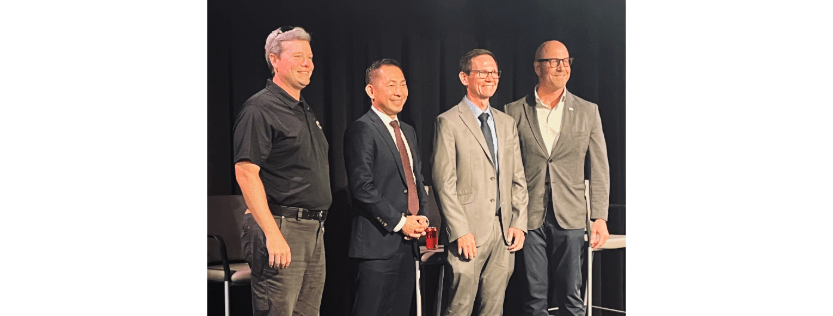
Identifying those gaps and building Huntsville’s next generation cyber workforce was the subject of a Cyber Huntsville panel discussion Tuesday.
“Are we developing the workforce today that meets our national security needs in five years?” asked Cyber Huntsville board member Jason Fickett, who served as moderator of the discussion.
“The rate at which software can be developed is rapidly changing,” said Brad Horton of the Army’s Threat Systems Management Office. “The people we need coming in now are truly digital natives.”
One of the challenges the nation faces is filling the available jobs. Teens are tending to shy away from computer and cyber-related jobs because of rhetoric that artificial intelligence will take away their jobs.
“One thing that haunts me is we’re going to need a workforce in five years,” said Dr. Tommy Morris, director of the Cyber Security Research and Education Center and a professor at UAH. “They still need to know computer science and computer engineering.
“We’re still going to need all our graduates in 3 to 5 years.”
AI can be an important tool in cybersecurity, said Nate Le, FBI section chief in the digital forensics and analytics section.
“AI is the hot topic right now and does speed things up,” he said. “It’s one of those transformative technologies.
“I’m looking forward to the next 3 to 5 years; academia and industry will bring the leverage.”
The panelists agreed that students with diverse studies would be ideal candidates for a cyber-based workforce.
“We train people to be problem solvers because what is new today will be obsolete tomorrow,” Morris said.
“I am of the mind that I look for someone who is an expert in something but has broad knowledge,” said Horton, a self-described “geriatric millennial.”
“It’s about someone being adaptive. Lifelong learners who are passionate at large about knowing things … these are the people I’ve seen in the cyberworld who are just awesome.”
Le agreed that diverse backgrounds are essential in hiring.
“One of the FBI’s strengths is hiring people from all walks of life … you have all these perspectives coming together to solve problems,” he said.
The panelists also agree on the importance of internships and co-ops to meet Huntsville’s workforce challenges.
“We have a high retention rate with interns,” Le said. “Before their senior year, students get connected with the local FBI office.”
Morris told the industry partners in the audience that internship programs are a win-win for the students and their companies.
“The students start working on your projects and they’re more likely to work for you,” he said. “They’re cleared and ready to go.”
Regarding clearances, which are required at most companies in Huntsville, Morris said the jobs would help the students gain clearances.
“They’ll keep their noses clean,” he said. “They see what they need to keep their clearance and they’re scared.”
He added that there needs to be a way to get students cleared while still in school, particularly in Huntsville.
To help meet the workforce challenges, Horton and Le suggested changes in government and industry cyber jobs requiring degrees. The Federal Aviation Administration hired more than 2,000 video gamers to train as air traffic controllers and no college degree was required.
“There’s a strong correlation between gaming and the cyber community,” Horton, a gamer himself, said. “They’re of the mindset ‘If I’m good at this, I’ll be good at that.’”
Le said the government should be “nimble to judge salaries (the GS pay scale) based on performance instead of a degree.”
Horton agreed. “We are self-limiting in some ways … we need to open the aperture.”