

Huntsville Hospital telemedicine program keeps patients close to home
Huntsville Hospital Health System has logged more than 400 telemedicine consultations since launching the program in February 2025, and the vast majority of those patients never had to leave their home hospital for specialty care.
“90.3% of patients who are consulted on for telemedicine are able to stay in their home hospital,” said Josh Hewiett, the health system’s telemedicine director. “Prior to telemedicine, 100% of those patients would have just automatically been transferred into Huntsville.”
The program grew out of a problem the health system kept running into as it expanded across North Alabama. Smaller hospitals in its network didn’t have access to certain specialists, so patients were routinely sent to Huntsville for care, often by ambulance or medical helicopter.
“We noticed a trend of patients being transferred into Huntsville for really specialty care, and that was the predominant reason they were being sent here,” Hewiett said.
Recruiting specialists to smaller communities proved difficult, so the health system built what Hewiett called a bridge instead.
“While we were recruiting, we just said we’ve got to come up with a bridge until we can get there,” Hewiett said. “That’s when the concept of telemedicine came into play.”
Telemedicine program manager Sara Werner said the patients seen through the program are not routine outpatient cases. They’re already in a hospital bed, either arriving through the emergency room with stroke-like symptoms or developing a new condition partway through their stay, and they need a specialist within 24 hours.
“Generally, these are patients with a high acuity, not outpatient who are at home,” Werner said. Without telemedicine, she said, those patients would have to be transferred by ambulance or medical flight.
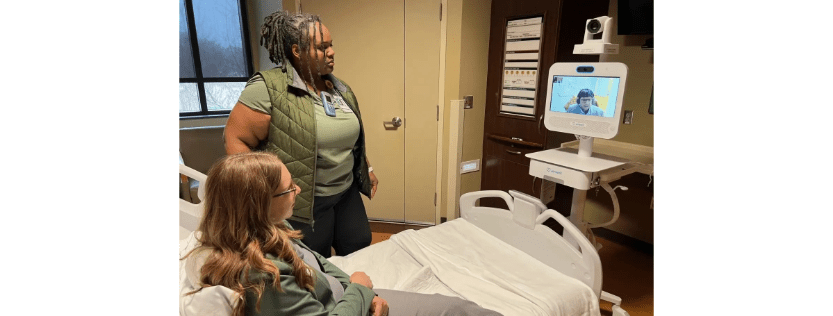
The visits happen through dedicated telemedicine carts stationed at partner hospitals, equipped with screens, stethoscopes and exam cameras. A physician in Huntsville connects through HIPAA-compliant, encrypted video software and can listen to a patient’s lungs or zoom in on their pupils remotely, depending on the specialty involved.
The health system rolled the program out to four specialties, choosing partner hospitals based on which sites had the highest number of transfers into Huntsville, compatible electronic medical record systems and physician availability to cover the added workload.
Werner said one of the most meaningful outcomes has come with critically ill patients near the end of life, who previously might have been transferred to Huntsville and died shortly after arriving.
“With telemedicine, we’re able to help care for these patients remotely, so the family is able to remain with the patient and be with them throughout that experience,” Werner said.
Both Werner and Hewiett stressed that the remote specialists supplement, rather than replace, the doctors and nurses already at a patient’s bedside.
“The telemedicine program really is there to support also the providers that are in person with the patient,” Werner said.
Growth has picked up as the program adds sites and specialties. The system added more than 100 consultations in just the last 60 days, Hewiett said.
The biggest obstacle to expanding further isn’t technology or funding, according to Hewiett. It’s finding enough physicians in Huntsville to cover both in-person patients and the growing telemedicine caseload.
“We are actively recruiting more physicians to care for the patients here in Madison County, like the physical face-to-face patients, but also to help us support and grow our telemedicine program,” he said.
For now, the health system’s focus is rolling its existing four specialties out to every hospital in its system before considering adding new ones.
“Our goal right now is, as we recruit new doctors, is to expand these four to every single system hospital,” Hewiett said. “Once we get to that point, we’ll likely add more specialties.”