

Von Braun Symposium panel goes behind the scenes of humanity’s return to the moon
Sometimes it’s the smallest and simplest things that can be the most problematic.
That goes from everyday life on Earth to everyday life in space.
Monday, the audience at the 26th Von Braun Space Exploration Symposium learned about a tiny problem during the Artemis II mission that proved to be a big inconvenience.
“One of the simplest issues gave us the most problems,” said Kirk Shireman, Lockheed Martin’s vice president of Human Space Exploration & Orion program manager. “You’d think venting urine overboard would be trivial. But it’s not.”
Shireman said tiny pieces of dust caused the disposal unit to malfunction and it was imperative to get the venting system repaired.
“We learned that sometimes space is a little bit different – dust bunnies fly in space,” he said. “The crew gets cranky when their toilet doesn’t work.”
Shireman’s comments came during a panel discussion on “Artemis II: Behind the Scenes of Humanity’s Return to the Moon.”
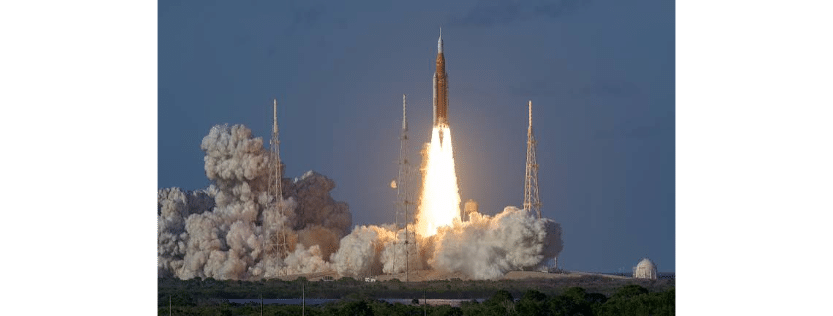
“This panel is about reflection on this incredible mission,” moderator Charlie Blackwell-Thompson, the Artemis II launch director at Kennedy Space Center, said after an opening video about the mission. “We can send a spaceship 250,000 miles from home and bring it back.
“That (the video) never gets old for me.”
A couple of the panelists were awestruck by a segment of the video that highlighted the engines.
“There’s quite a bit of thermal dynamics going on,” Lauer said to laughter.
“That’s data I didn’t want to see,” Shireman replied.
The panelists agreed that a big takeback from the mission was that everyone was part of “Team Artemis II.”
“The launch showed teamwork was necessary to get the job done,” said David Ezell, Teledyne Brown Engineering program manager of the Launch Vehicle Stage Adapter. “We all became Artemis.”
Blackwell-Thompson echoed Ezell.
“Launch is the ultimate definition of teamwork,” she said. “There’s something about launch day … it’s a very visible demonstration of collaboration.
“It’s a team sport; everybody has their position and works to a common goal.”
To the panel, the teamwork also transformed the concept of a mission into reality.
“Up until Artemis II, we were in test mode,” said Jason Grow, associate chief engineer, Launch Operations, Space Launch System, Boeing. “But the astronauts loading into Orion made it real.
“I still get goosebumps.”
Mike Lauer, senior program director SLS/RS-25 engines, L3Harris, said there were moments that proved emotional.
“Through the magical moment when the crew came out, I thought ‘it’s getting pretty danged real’,” he said. “When we throttled back to main engine cutoff, it was all tears and hugs.
“It went from a machine-like thing to something human.”
Lauer said the mission brought a sense of pride back, much as the Gemini and Apollo programs did when he was growing up.
“I remember the Gemini and Apollo launches and building models,” he said. “The younger generation is excited about space again. My grandson wants an Artemis Lego set.
“I’m proud that America is back at the forefront of space exploration.”