

New NASA workforce isn’t all rocket science
We all know the saying “this isn’t rocket science.”
And, in the case of NASA and its workforce, it isn’t all rocket science.
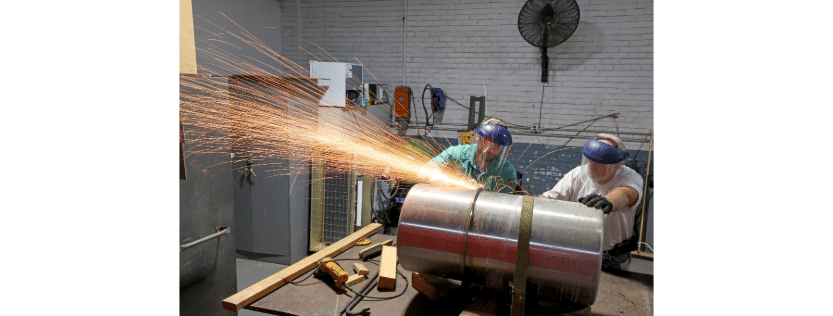
Not to discount the hundreds of engineers, scientists and contractors needed to put a rocket into space, “you can’t build rockets without the technicians,” said Lyndsay Ferguson, vice president, Talent Initiatives, Huntsville/Madison County Chamber.
Ferguson was the moderator Wednesday of a panel discussion on the final day of the 26th Von Braun Space Exploration Symposium at the University of Alabama in Huntsville. The panel’s topic was “Navigating the New NASA Workforce: Change, Challenge, Community.”
“Community college-level skills are important for us,” said Keith Savoy, deputy director of NASA’s Michoud Assembly Facility in New Orleans.
Finding the skilled talent is one of the challenges to prepare students for the space workforce.
“Providing them hands-on experience,” said Larry Mack, director of human capital for the Marshall Space Flight Center. “It’s all about the work-based experience and preparing them to do the job from day one. We need technicians, space welders, robotics experts.”
“We’re opening the aperture for high school CTE and community college certifications to join the space workforce.”
These technical skills will be needed over the next five to 10 years, the panel said.
“They will have needs in the skilled technical workforce,” said Kevin McGhaw, center integration director, Office of STEM Engagement at Marshall. “They’ll need strong, critical decision-making skills, [and be able to] leverage AI and make sound judgements.”
One of those skilled technicians was credited with finding and fixing a broken weld and ensuring a shuttle mission had a successful launch.
“It was a welder that saved our bacon on an external tank weld,” said Parker Counts of Counts Consultants. “Engineering is one thing but you also have to have the technicians.”
The role of mentors in guiding students and new technicians is vital for the space program.
“Team up (the students) with the appropriate person who can share the knowledge,” Savoy said. “You have to give immediate feedback and give them good things, not just things that are wrong.”
McGhaw echoed Savoy on workers sharing their knowledge and experience with the students.
“Giving them someone with experience who can walk alongside them is a game changer for the student,” he said.
But Savoy said finding the experienced worker to serve as a mentor can be challenging.
“There’s not a lot of high-level experience available for side-by-side training,” he said. “If you get one, in a month they could be gone to a higher paying job.”
Mack said losing workers for high-paying private jobs is a day-to-day challenge.
“We live it every day,” he said. “You look outside the (Redstone Arsenal) gate and there is competition for the talent. We have to show there is a work-life balance and need to understand the employees and what is important to them.
“It’s up to us to get it on the front side of recruiting.”
The panel also tackled the ever-growing influence of artificial intelligence in the workplace.
“AI is a force multiplier; it allows us to do so much more,” said McGhaw. “We encourage students to leverage it and not lean on it solely. The students need to recognize there is accountability for them.”
Counts, who worked on the Apollo and space shuttle programs, said AI is a tool that needs to be used and not misused.
“I came out of school with a slide rule,” he said. “I think one rule to follow is you better check those things; sometimes they can lead you down a path you don’t want to follow.
“As long as we’re in control, there’s a lot of capability.”