

National Security Commission on Emerging Biotechnology makes only Alabama stop at HudsonAlpha in Huntsville
On Tuesday, April 28, the National Security Commission on Emerging Biotechnology (NSCEB) visited the HudsonAlpha Institute for Biotechnology in Huntsville as part of the organization’s Biotech Across America Roadshow. The roadshow is a nationwide effort to highlight biotechnology innovation across the country and inform future recommendations to Congress.
HudsonAlpha is the commission’s only stop in Alabama.
The NSCEB is a temporary advisory group created by Congress to help strengthen U.S. leadership in biotechnology and biomanufacturing. Its work focuses on advancing emerging biotech capabilities, protecting national security interests, and preparing the country for the growing bioindustrial economy.
NSCEB Commissioner Paul Arcangeli, a Huntsville native who took part in the tour of HudsonAlpha, said the area’s growing biotech ecosystem is having a significant impact on the local economy and U.S. national security.
“HudsonAlpha’s work in DNA sequencing is transforming agriculture and powering AI‑driven discovery. Smart, strategic federal policy can further support this forward‑looking work, protecting our national security and strengthening U.S. global leadership,” Arcangeli said.
Neil Lamb, PhD, president of HudsonAlpha, said the NSCEB’s visit was an opportunity to showcase his organization’s work and statewide partnerships with biotech companies.
One area Lamb was especially eager to highlight was HudsonAlpha’s work in plant genomics.
“We are one of the world’s experts in sequencing plants and gaining meaning from plants,” Lamb said.
When asked about agriculture, Arcangeli said the NSCEB is focused on developments happening across a wide range of crops and technologies.
“What’s interesting to us are the things that are happening in increasing crop yields, pest resistance and climate resilience,” Arcangeli said.
As federal leaders explore large-scale biotechnology initiatives, Lamb said HudsonAlpha is ready to play a role.
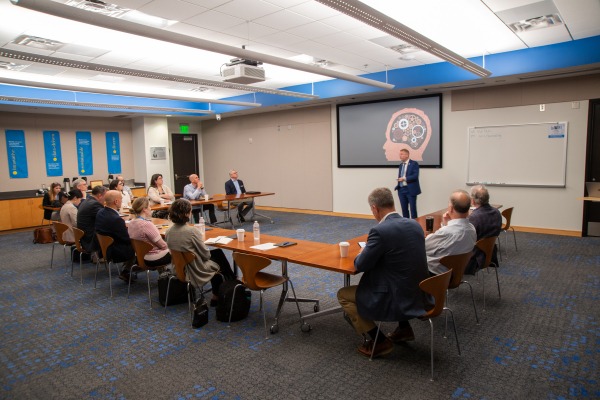
Photo: Katie Holt
“There’s some initiatives that Congress is looking at to go out and sequence all living things in public lands. HudsonAlpha is primed to do that kind of work,” Lamb said.
Bioliteracy, or a general understanding of biology and biotechnology, is increasingly seen as essential as these fields shape industries ranging from healthcare to agriculture.
HudsonAlpha supports that effort through hands-on education programs that introduce students and educators to the fundamentals of biotechnology.
“We have an education program that is second to none, not only across the state, but I would say anywhere in the nation. We’re looking forward to being able to talk about how we build a bioliterate society along with tomorrow’s biotech worker,” Lamb said.
Arcangeli said biotechnology’s impact is far-reaching and stressed the importance of bioliteracy for the nation’s future.
“Bioliteracy is absolutely essential to making sure that we lead in biotech, not just in innovation, but also in manufacturing and agriculture,” Arcangeli said.
HudsonAlpha hosts more than 50 associate companies ranging from early-stage startups to established biopharmaceutical firms. The campus’ “business of biotech” support system allows companies to collaborate with researchers and utilize shared resources, helping them grow more efficiently.
Commissioner Arcangeli joined a presentation and panel discussion with several of these companies.
The visit included participation from organizations including:
- AI Huntsville
- Alabama Department of Commerce
- BIO-ISAC
- Discovery Life Sciences
- Fortuna Therapeutics
- GeneCapture
- iXpressGenes
- Score Pharma
- University of Alabama Huntsville Center for Cybersecurity Research and Education
- Varda Space Industries
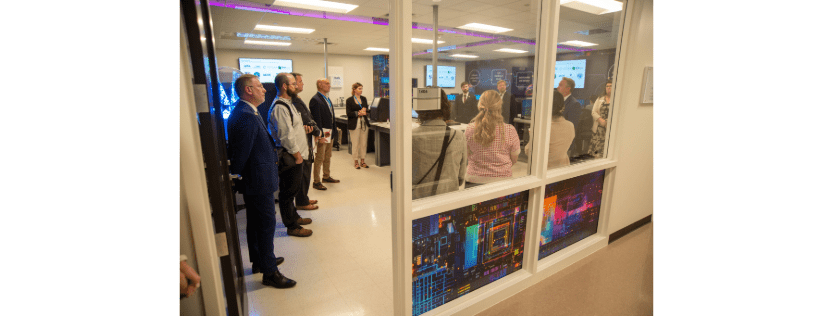
Arcangeli’s visit included stops at several of HudsonAlpha’s key facilities, including the Genome Sequencing Center, Bio-Cybersecurity Lab, and the Chan Greenhouse, highlighting the institute’s interdisciplinary approach to biotechnology.
In the greenhouse, researchers are developing more resilient crops designed to improve food security, while the Bio-Cybersecurity Lab focuses on securing genomic data and supporting workforce training in biotechnology.
Highlighting the wide-reaching impact of the industry, Arcangeli pointed to biotechnology’s role in national security.
“If you just look at biotech, food security is national security. Health security is national security, but also biotechnology is going to create manufacturing opportunities. It’s going to create biomining opportunities. The uses are endless and all of them relate in the end to national security,” Arcangeli said.
Overall, the NSCEB’s interest in HudsonAlpha further reinforces the Huntsville’s position at the intersection of biotechnology, defense, and advanced technology, an ecosystem leaders say is only continuing to grow.