

A city for every generation: how a rapidly growing Huntsville is supporting its senior population
Zane Drost is the executive director of Enable Madison County, a local nonprofit that helps older and homebound residents continue living independently through wheelchair ramps, grab bars, handrails, weatherization, durable medical equipment, and case management.
Due to the personal nature of Enable’s work visiting seniors in their homes, he and his team see firsthand the challenges facing Huntsville’s older residents.
Drost said many older residents are trying to remain safe and independent at home without nearby relatives, friends or caregivers to assist them.
“A lot of the senior adults are having to rely on other senior adults to take care of them who are also not in the best of health,” Drost said.
As Huntsville’s senior population grows, so does the need for that support.
“Sometimes they are a forgotten generation. We forget sometimes that our success was built on the backs of the generations before us, and the need is continuing to grow,” Drost said.
TARCOG serves as the Area Agency on Aging for DeKalb, Jackson, Limestone, Madison and Marshall counties.
The organization’s executive director, Michelle Gilliam Jordan, said Huntsville saw its population of those 60 and older grow nearly 18 percent from 2019 to 2024.
According to TARCOG, Huntsville’s total population was 222,791 in 2024, including 50,743 people aged 60 and older. In 2019, the city’s population was 196,219 with 43,011 people age 60-plus.
That growth comes as the need for assistance is already high. Across the five-county region, the agency received nearly 100,000 calls for assistance last year.
Jordan said many individuals who were at one time stationed at Redstone Arsenal and moved away later return to Huntsville for retirement.
“It’s not a surprise because when you look at the larger growth impacts on Redstone Arsenal, including past BRACs (Base Realignment and Closures), when people move here, they bring their family including parents and grandparents,” Jordan said.
Jordan said one of the greatest challenges can be knowing where to turn for help. TARCOG’s Aging and Disability Resource Center answers questions, determines which services a caller may qualify for, and provides referrals to other community resources when TARCOG does not offer the assistance needed.
The most frequent requests include food and medication assistance, transportation, legal services, help with utilities and rent or mortgage payments, caregiver support, senior employment and in-home services.
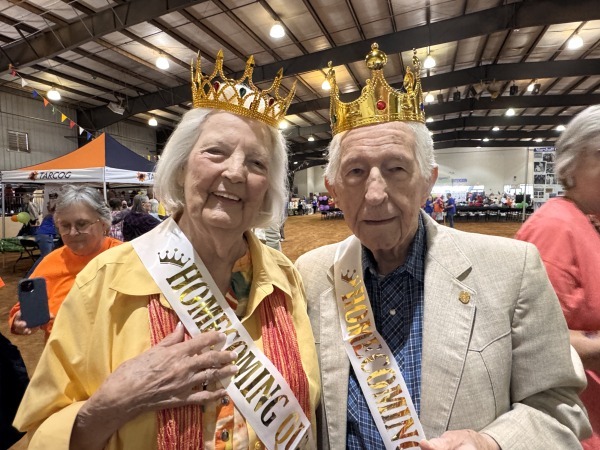
In addition to providing services, TARCOG has hosted an annual event for the past 39 years to give the aging community an opportunity to have fun. This year, nearly 900 older adults from across North Alabama enjoyed a “Homecoming”-themed celebration in May for Older Americans Month at TARCOG’s Senior Fun Fest in Huntsville. Photo: TARCOG
Aging at home
Finding assistance is one challenge. Maintaining independence at home is another.
Drost said older residents routinely face several overlapping barriers, including deteriorating housing, fall hazards and a lack of nearby family members, friends or caregivers.
Enable’s case managers visit clients in their homes, evaluate their safety and personal needs and connect them with services ranging from accessibility improvements to hygiene products and incontinence supplies.
The need is particularly visible in north Huntsville. Drost said the 35810 ZIP code generates Enable’s greatest demand for wheelchair ramps, grab bars and handrails.
Enable built 101 ramps during the fiscal year that ended June 30, returning to the organization’s pre-pandemic pace. Donations, fundraisers and corporate partnerships pay for the materials, while volunteers provide the labor.
“All our grab bars and ramps, everything’s volunteer-based, so there’s no labor cost,” Drost said.
Volunteers contribute just under 12,000 hours across Enable’s programs annually. Drost estimated that paying for the same work would cost approximately $350,000 in payroll.
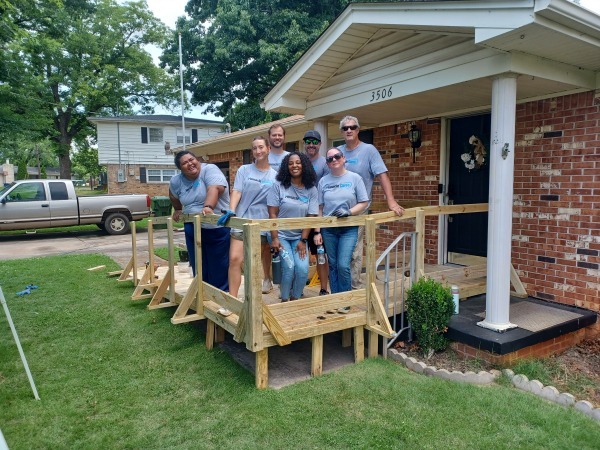
Volunteers with Enable Madison County build a wheelchair-accessible ramp outside a Huntsville resident’s home, helping older adults remain safe and independent at home. Courtesy of Enable Madison County.
Demand extends beyond accessibility projects. Enable’s case managers completed 40 home visits in July. In 2025, the organization added 240 new case-management clients and provided more than 1,400 referrals to other agencies when residents had needs Enable could not meet.
A wheelchair ramp or piece of medical equipment may also reduce the physical and emotional demands placed on a spouse or family caregiver.
“If we can relieve a burden on the caregiver, getting a loved one where they can get out of their house with a wheelchair ramp so they can go to their doctor’s appointments, that’s huge,” Drost said.
Drost said Huntsville’s leaders should also consider the need for smaller, affordable homes in communities where older adults can remain independent while staying connected to others.
One example Drost mentioned is Graham Farms, a planned mixed-use development in Limestone County. The City of Huntsville approved a development agreement for the project in August that includes a 100-lot subdivision reserved for adults age 55 and older.
Staying active and connected
The needs of older residents transcend physical safety and material assistance. They also want opportunities to remain active and connected. For those who live alone or are navigating a major life change, that social connection can be as meaningful as the physical activity.
STUDIO 60 provides educational, recreational, fitness and social opportunities for Huntsville and Madison County residents age 60 and older, free of charge.
Janet South, development director for STUDIO 60, said some of the organization’s members first came to the center after losing a spouse and experiencing depression.
A friend or fellow church member may have encouraged them to take a class, and many now return regularly to participate in different activities and try something new.
“They want to be active. They want to be engaged with other people,” South said.
Members can take a Pilates or ballroom dancing class, learn woodworking, research their family history or improve their technology skills. The center even offers an adult day care center and provides meals, two services that provide relief to caregivers.
South said the center currently welcomes approximately 500 people each day and adds more than 100 new members per month.
Continued growth, however, is creating a need for facility improvements, additional funding and a long-term plan for serving Huntsville’s expanding older population.
STUDIO 60 is an independent nonprofit supported by fundraising, grants, local partners, individual donors and business sponsors. South said businesses can contribute financially or work with the center to provide educational programs for members.
“We welcome donations and we want to partner with businesses in the community. We have different businesses come in and teach education classes and various topics for seniors,” South said.
Together, the three organizations address different parts of the same challenge. TARCOG helps residents find food, transportation, legal assistance and in-home support. Enable modifies homes and helps ease the burden on caregivers. STUDIO 60 gives older adults a place to exercise, learn, and build relationships.
Drost offered an encouraging reminder that even small acts of care can make a meaningful difference for older adults.
“As a community, let’s always remember to just stop and check on the senior adults in our inner neighborhood because they are truly saints. They paved the way for us to have the success. And, we’re doing that for our generations that follow us,” Drost said.