
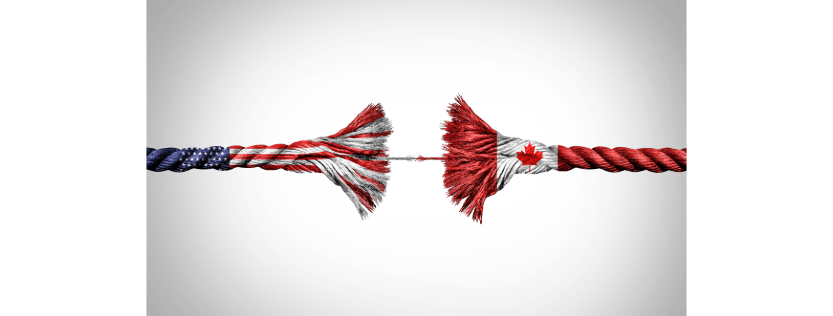

Oh Canada! Trade war will have adverse economic impact on Sweet Home Alabama
Things are about to get ugly for Alabamians in the trade war between the U.S. and Canada.
You see, Canada is Alabama’s No. 1 international trade partner. Alabama exports about $4.3 billion in goods to Canada each year, representing nearly 20% of the state’s total exports. Also, 129 Canadian-owned companies employ 13,850 workers in Alabama.
And, hundreds of residents of the Hockey Capital of the South may take a crosscheck to their wallets because hockey equipment, including sticks and skates, are among some 550 goods targeted for a 50% tariff announced by President Trump.
“Donald Trump may not believe America needs Canada, but Alabama certainly does,” Democratic gubernatorial nominee Doug Jones said in a statement to Huntsville Business Journal. “Canada is Alabama’s largest trading partner, with $7.6 billion in goods traded between Alabama and Canada last year. Alabama imported $3.3 billion in Canadian goods, and tariffs on Canadian goods are taxes that will raise costs for Alabama businesses and families.
“Canada also purchased $4.3 billion in Alabama goods, including $1.9 billion in Alabama-made automobiles.”
Sen. Tommy Tuberville, Jones’ Republican opponent in the governor’s race, supported the president’s decision in a comment to the Business Journal saying Canada has “absolutely been stealing us blind for years.”
In the tariff dispute, each side has blamed the other for the collapse of negotiations last week, leading the U.S. to impose 50% tariffs on $20 billion worth of Canadian goods.
Canada has set Sept. 8 as the start of its retaliatory penalties on about $28 billion worth of American goods, including steel, dairy products, appliances and farm equipment.
Ontario Premier Doug Ford said eight states, including Alabama, should be targeted for “additional retaliatory tariffs” in the wake of the breakdown of trade talks between the two countries.
Canada’s tariffs will be at rates of 15%, 25% and 50%, matching the corresponding U.S. tariff rate on more than 700 products such as pulp and paper and electronics. The tariffs on many American products would double from 25% to 50%, with the largest share of the new measures affecting steel and aluminum.
“Canada’s retaliatory tariffs will make Alabama products more expensive, reduce demand and put Alabama manufacturing jobs at risk,” Jones said. “Tommy Tuberville says these tariffs will bring manufacturing back, but manufacturing is not gone in Alabama. Our automobile industry is growing, and this trade war could hurt the very workers he claims to support.
“Tuberville clearly does not understand tariff policy or Alabama’s economy. Instead of standing up for Alabama workers, he is taking a knee to Donald Trump.”
In a statement to Huntsville Business Journal, Prime Minister Mark Carney said his country’s tariffs would include steel products as well as dairy, appliances, agricultural equipment, pulp and paper and electronic products.
He said the increased tariff on autos will hurt American workers because Canada buys more American cars than the EU and other countries.
“What is the message sent out to the workers in Michigan, Ohio, Kentucky, Alabama?” Carney said. “These workers depend absolutely on Canada – their largest consumer.”
Alabama exports $4.3 billion in goods to Canada
- Automobiles -$1.9 billion
- Aircraft and parts – $340 million
- Trucks – $238 million
- Paper and paperboard – $155 million
- Iron and steel alloys and semifinished products – $127 million
- Plastics and plastic articles – $120 million
- Iron and steel tubes, pipes and sheets – $75 million
- Optical, medical and precision instruments – $61 million
- Motor vehicle parts – $61 million
- Aluminum and aluminum articles – $54 million
Alabama imports $3.3 billion in goods from Canada
- Aluminum & aluminum articles -.$438 million
- Engines & turbines – $421 million
- Motor vehicle parts – $233 million
- Aircraft and parts – $212 million
- Crude petroleum – $132 million
- Plastics and plastic articles – $117 million
- Animal or vegetable fats, oils and waxes – $100 million
- Iron and steel alloys and semifinished products – $90 million
- Furniture and bedding – $88 million
- Softwood lumber – $67 million
According to the Associated Press, here are some of the Canadian products specified by the White House:
- Natural honey
- Bulbs for plants such as tulips and lilies, as well as some fresh cut flowers
- Seeds for beets, onions and other vegetables
- Horsehair, tortoise shells, antlers and various animal products
- Alcohol such as beer, vermouth and cider
- Furniture knobs, wallpaper and lighting fixtures
- Plates, cups, bowls and other kitchen or tableware
- Paints, varnishes, vinyl tile floor coverings and various plywood sheets
- Ice skates, golf equipment, fishing rods and other sports accessories
- Perfumes, makeup and manicure preparations
- Suitcases, bags, gloves and coats
- Toys and certain “articles for Christmas festivities”
- Digital cameras and recording equipment
- Smartphones and video game consoles
- Envelopes, cigarette paper and toilet or facial tissue
“We have recognized from the beginning that America has changed, and that we will not return to our old relationship,” Carney said. “Our government understood that America is altering all its trade relationships, putting tariffs on its closest allies and charging for access to its vast market.
“Canada has what the world wants and we will not allow any nation to determine our future.”