
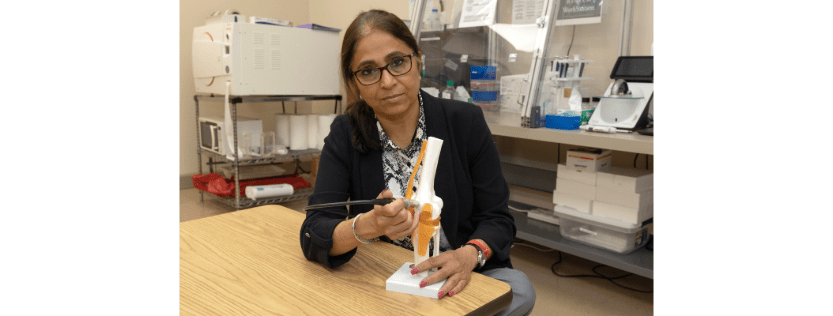

UAH study: Ultrasound therapy may help reduce inflammation and support joint healing
The “snap, crackle, pop” that some of us wake up to in the morning – no, not the cereal – may be a thing of the past.
According to a study by University of Alabama in Huntsville researchers, ultrasound therapy may help accelerate tissue repair for joint injuries and some cases of osteoarthritis.
Their findings suggest continuous low-intensity ultrasound may help shift the body’s immune response from prolonged inflammation toward tissue repair, a discovery that could eventually contribute to novel treatments for joint injuries and post-traumatic osteoarthritis.
The study, published in the Nature journal Scientific Reports, was conducted by a multidisciplinary team under the leadership of Dr. Anuradha Subramanian, professor of chemical and materials engineering. The work included biological experimentation by Dr. Shahid Khan as part of his doctoral work with computational and statistical methods developed by Dr. Satyaki Roy, professor of mathematical sciences, along with contributions from graduate student Owen Trippany.
The research examined how a non-invasive form of ultrasound affects macrophages, specialized immune cells that play a central role in both inflammation and healing.
“Following injury, the body recruits inflammatory ‘defender’ macrophages to clear damaged tissue and healer macrophages to support repair and recovery,” Subramanian said. “Persistent dominance of defender macrophages can create a prolonged inflammatory environment that contributes to post-traumatic osteoarthritis.”
The UAH team investigated whether continuous low-intensity ultrasound could encourage macrophages to move away from this prolonged inflammatory state and toward one associated with tissue repair.
“Post-traumatic osteoarthritis is driven in part by persistent inflammation that limits tissue repair and accelerates joint degeneration,” Roy said. “Our team is interested in continuous low-intensity ultrasound because it offers a non-pharmacological, non-invasive approach that may help regulate immune cell behavior and promote a more reparative healing environment in injured joints.”
While the work remains at the laboratory research stage, the findings highlight the potential of non-drug, non-invasive technologies to influence immune behavior and support healing after injury. The researchers believe the approach could ultimately complement future therapies aimed at slowing the progression of osteoarthritis and improving recovery following joint trauma.
“The next steps will involve validating these findings in animal models of early post-traumatic osteoarthritis and studying how ultrasound-based modulation affects long-term tissue repair in joint injury settings,” Subramanian said.
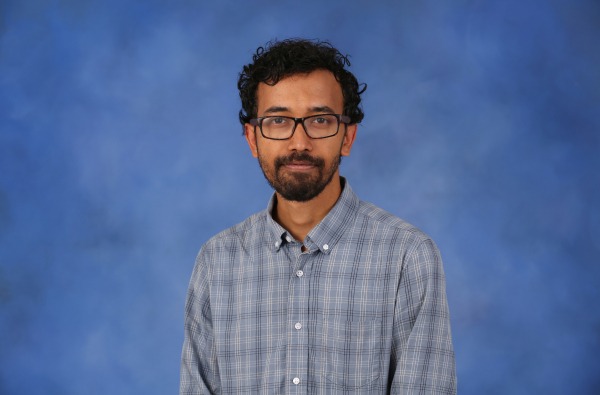
Dr. Satyaki Roy, Mathematics, faculty. (Michael Mercier/UAH).