

ALDOT director: Meeting the state’s highway needs is a balancing act
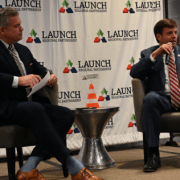
John Cooper, the director of the Alabama Department of Transportation, was to the point in stressing the importance of good roads and highways in a way that anyone can relate.
“I think it is important for the quality of life in Alabama,” he said. “Miss Maude needs to be able to drive to church and the grocery store and not be upset.
“Transportation is literally what makes the world go.”
Cooper was the feature speaker at the recent Launch North Alabama Regional Transportation Summit at the Huntsville Marriott.
Launch is a 501(c)(3) non-profit helping strengthen the North Alabama region through entrepreneurship, land use, and workforce initiatives. Created in 2014, the organization is united by the belief that the region’s prosperity depends on North Alabama counties working and planning together, committed to fostering regional economic growth and an enviable quality of life for its residents.
The summit featured panel discussions on the impacts of transportation through trails, aviation, transit, logistics, tourism, and economic development.
Cooper said transportation is a quality of life issue that’s not as easy as just helping Miss Maude go to church. He said it’s a balancing act of meeting the road needs of the state, cities and counties.
“It is difficult to balance the needs of people trying to get to work in Huntsville with trying to get to work in the Shoals,” he said. “That story is the same for cities around Huntsville – you’re trying to help people from all around Huntsville get to Huntsville to work.
“We have to solve the issue of how we place priorities.”
Cooper said the road system is divided into three groups – urban, suburban and rural.
“An example of an urban road is U.S. 431 through Huntsville,” he said. “The same road is also suburban and Highway 69 is rural.
“We have to decide who to spend money on and which roads: 3,000 vehicles per day versus 80,000 per day. The rural road is just as important to the county resident as the urban road is to the city people.”
To help the smaller and rural communities maintain their roads, Cooper said he asked the Legislature to include money for small roads in the state’s Rebuild Alabama program which funds local road and bridge improvements across all 67 counties using state gas tax revenues.
“There are 460 municipalities in the state, less than 50 have more than 10,000 people,” he said. “If you look at a city, if (people) aren’t buying groceries and paying taxes, the city’s budget doesn’t work.
“You have no prayer to keep your streets in repair.”
To help the small municipalities address their repair needs, Cooper said the state established the Rebuild Alabama grant program and, “for $100,000, you can have a $450,000 project.”
“The Rebuild grant program has been our biggest success.”
Meanwhile, Cooper downplayed some motorists’ hopes of the state building and improving interstates, highways and interchanges.
“When you have gas stations and cafes on the direct access, it’s impossible (to improve interchanges),” he said. “If you’re going to have a regional answer, somebody’s going to have to give a little bit.”
Cooper leaves office in January but “somebody has got to deal with these problems.”
“The questions in so many areas is one thing in Morgan County is another thing in Chilton County,” he said. “We as a society have this challenge. What are we willing to pay for it?
“It’s important we decide as a society what we want.”