

Uncovering the mystery of Huntsville’s brilliant anti-gravity scientist
Dr. Ning Li’s son talks about his mom’s career and legacy — and the internet’s long, strange obsession with her so-called “disappearance.”
In this line of work, you develop a particular skill that they don’t teach in journalism school and probably couldn’t if they tried: the ability to explain to a total stranger, in the first ten seconds of an unexpected phone call, exactly how and why you obtained their private number, and to do it in a way that reads as professional curiosity rather than the work of a stalker.Without it, even the most legitimate act of reporting can sound like something that ends with a restraining order.
Some stories make this easier than others.
As I sat with my phone in my hand waiting for George Guangyu Men to pick up, I still hadn’t worked out exactly how I planned to pivot from the introduction to the part where I explained that I was writing a story about the disappearance of his mother, prominent Huntsville scientist and Chinese immigrant Dr. Ning Li. The wrinkle, of course, was that his mother had never actually disappeared. She had never been a missing person in any legal or official sense. George, as far as I could tell, had absolutely no idea that millions of people on the internet believed otherwise.
If the conversation could just survive that first strange obstacle, I figured, things would proceed more or less normally.
Well. Mostly normally. There was still the matter of the very first question on my list: George, did your mother happen to invent anti-gravity technology?
I stumbled into this story the way you stumble into most good ones, sideways, late at night, through a YouTube rabbit hole I had no business going down. The video was titled “The Scientist That Discovered Antigravity Then Disappeared Completely,” and it had racked up more than three million views. For the next 22 minutes, I sat in the dark listening to a creator who goes by Barely Sociable lay out a story that felt less like a science documentary and more like a cold case file, except it was set not in some shadowy government compound, but right here in Huntsville, Alabama.
Dr. Ning Li arrived in America from China in 1983 and eventually landed at the University of Alabama in Huntsville’s Center for Space Plasma and Aeronomic Research. She was quiet, focused, relentless in her work. And between 1991 and 1993, working alongside co-author Douglass Torr, she authored a series of papers that made the scientific community sit up very straight in their chairs.
What Li described was a practical pathway to producing an anti-gravity field using a high-temperature superconducting disc, or HTSD.
The conventional wisdom, the kind that gets hammered into every physics student until it becomes gospel, holds that antigravity is theoretically impossible. Gravity is a fundamental force of nature. You don’t tame it. You don’t negotiate with it. It simply is.
Li disagreed.
Inside an HTSD, she argued, the faint gravitational effect of each individual atom compounds across billions of atoms in the disc. Feed the thing roughly one kilowatt of electricity and, according to Li, you’d produce a force field capable of effectively neutralizing gravity above a one-foot-diameter column stretching from the surface of the Earth all the way to outer space.
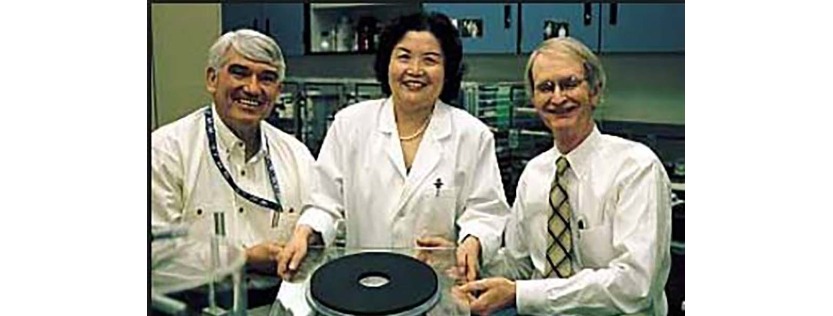
To show they meant business, Li and Torr invited officials from Popular Mechanics to their Huntsville laboratory to see a 12-inch prototype in progress. The pitch was blunt: once finished, place a bowling ball anywhere above this disc, and it will stay exactly where you put it.
By the late 1990s, Li claimed her devices were fully functional. She was publishing. She was presenting. She was the kind of scientist people wrote breathless articles about.
And then, more or less, she wasn’t.
The implications of what she was working on were staggering enough that it felt almost irresponsible to take them seriously. Taming gravity would not merely change transportation, it would dismantle it and rebuild it from scratch. Every fuel source, every engine, every road and runway becomes a relic overnight. You want your hoverboard from Back to the Future? You’d have it. You’d also have the end of the fossil fuel economy, which is the kind of technological development that tends to make very powerful people very nervous.
In 1999, Li left UAH and founded her own company, AC Gravity, with the stated intent of commercializing her research. The chair of UAH’s Physics Department, Larry Smalley, believed in the work enough to leave the university and join her. In 2001, the U.S. Department of Defense awarded AC Gravity a grant of $448,970 to continue the research.
The results of that grant were never published.
In fact, after 2002, Li never published anything again. AC Gravity’s business license was renewed annually through 2018, but there is no public record of any work the company actually produced. The trail goes quiet and stays quiet, with two exceptions.
The first: a document surfaced by Barely Sociable showing Li had delivered a presentation at the 2003 MITRE Corporation conference, the organization that manages federally funded research for multiple U.S. agencies, titled “Measurability of AC Gravity Fields.” She presented alongside a Redstone Arsenal official from U.S. Army Aviation and Missile Command.
Whatever she was doing, she was still doing it.
The second: a private email sent in May 2003 to colleagues, in which Li claimed to have observed “11 kilowatts of output effect” during an experiment. What that number means, exactly, nobody outside of a classified file seems to know. After that email, the record on Ning Li goes dark.
The silence did not go unnoticed. In 2004, journalist Tim Ventura reached out to physicist Eugene Podkletnov, one of Li’s peers in the field, with an email bearing the subject line: “Tracking Down Dr. Ning Li.” He explained that every two months he had been trying the email address Podkletnov had once provided for her. Someone, he noted, was reading the messages. Nobody was replying.
Podkletnov confirmed she was alive, still working with the Department of Defense, and simply unable to discuss her work. He also admitted he no longer had a working phone number or email address for her himself.
Then, in July 2008, a physicist named Jack Sarfatti gave an interview that became the rocket fuel for every conspiracy theory that followed. The clip was posted on YouTube and featured prominently in Barely Sociable’s video.
“This is very important from a national security and political point of view,” Sarfatti said. “One of the key scientists is a Chinese woman named Ning Li. She has disappeared and gone back to China. She was working at NASA and the Redstone Arsenal but she has disappeared for several years now. The people at the Pentagon cannot reach her anymore. She is allegedly back in China and the Chinese are pouring money into similar experiments now. That’s why our intelligence guys are very interested. The most likely people to develop the first anti-gravity propulsion technology are the Chinese.”
The video ends more or less there, no resolution, no answer, just a hard cut to black and three million people left to draw their own conclusions.
I replayed it immediately. Then I started making calls.
The years since the video’s release have produced exactly one verifiable update: an obituary posted to the Berryhill Funeral Home website. Dr. Ning Li passed away on July 27, 2021. She was 79 years old. The obituary described her as “one of the world’s leading scientists in super-conductivity anti-gravity” and noted she had constructed the first 12-inch HTSD in the late 1990s.
It also listed the name of her son: George Guangyu Men.
After an embarrassing amount of digging, I found a business LLC registered in Huntsville under George’s name, along with a phone number. I sat on it for longer than I’d like to admit. But I was too far down this particular rabbit hole to turn back, so I called.
George answered. And once I got through the explanation of how I’d found his number, which he took with considerably more grace than I probably deserved, he agreed to meet.
George informed me early on that I wasn’t the first person to contact him about his mother. Letters had arrived from New Zealand and other far-flung corners of the world, written by people hungry for details about Dr. Li’s research. But no one had called his phone before. He’d known vaguely that people were still interested in his mom. He had no idea of the scale of it.
I played him Barely Sociable’s video in his living room, his two children watching alongside him. He took it in quietly, occasionally shaking his head. When it ended, he was able to clarify, with some amusement and some weariness, several things people had gotten spectacularly wrong over the years.
Most importantly: Dr. Li never left the DoD. She never went to China. She never defected. Sarfatti’s alarming 2008 interview was half right at best.
There was, in fact, a visit from Chinese officials that year. Members of the CCP were touring the United States and made a point of stopping to see Li in person. They wanted her back. She had no interest. Li had emigrated with George in the late 1980s and had built her life here. When her own mother passed away in China, she attempted to return for the funeral. The U.S. government denied her permission to travel.
“I remember that so clearly,” George said. “She was very upset.”
He also described the change he noticed in his mother after she left UAH for the private sector. The transition from academic freedom to classified work had a visible cost.
“When she was at the University, she loved to publish her findings,” he said. “But after she got her top secret clearance, she wasn’t allowed to share anything anymore with anyone. She became much quieter. She would return from work looking worn down with her makeup messed up. It wasn’t like that when she was at the University.”
George laughed once, recalling the single time he’d ever tried to ask his mother about her work directly. “I said, ‘Mom, do you need to tell me something?’ She told me, ‘First off, you don’t know anything. Second off, if you even think you might know something, you forget about it.’ I said okay, that’s fine.”
The FOIA requests I filed for the results of her 2001 DoD grant came back denied, consistent with prior denials from other requesters. Whatever Li was working on in those final years before the accident, it remains classified, and it seems likely to stay that way for a very long time.
In 2014, Dr. Li was struck by a vehicle while crossing a street on the UAH campus. The accident caused permanent brain damage and led to an Alzheimer’s diagnosis shortly afterward. She never returned to work.
Her husband of 46 years witnessed the accident. He suffered a heart attack at the moment of impact. He passed away the following year.
George brought his mother home and cared for her himself for the next six years.“People asked how I could do that for six whole years,” he said. “I said, first of all, she’s my mother. Second of all, she gave us a better life.
Without her, I wouldn’t have been able to come to the states and get my education. Third, I just really admired her as a person.”
In her final years, George found ways to reach her that medicine could not. When the Buddhist-inspired music he played for her didn’t bring her comfort, a member of his church from the Chinese Christian Church of Madison suggested trying Christian hymns. He noticed the difference immediately.
She passed away on July 27, 2021.
I’ve been turning this story over in my head since the day I made that call. Huntsville calls itself Rocket City. It wears that identity like a badge of honor, a place built on intelligence, innovation, and the audacity to point things at the sky. And yet somehow, a woman who may have spent the better part of a decade trying to abolish gravity itself lived and worked and died here without so much as a historical marker.
How had I never once heard her name?
In our first phone call, before he’d agreed to anything, George asked me what I was hoping to accomplish. I didn’t have a good answer then. I do now.
The conspiracy theorists will keep their theories. The UFO forums will keep speculating. Three million YouTube views will become four, then five, and the comments will keep asking the same unanswerable questions about classified documents and Chinese defections and government cover-ups. That’s fine. That’s the internet. It runs on mystery.
But George Men is not interested in the mystery. He is interested in his mother, in who she actually was, what she actually believed, and what she passed down to her grandchildren when the clearances and the classified files and the silence had stripped everything else away.
Find your one thing, she told them. Concentrate on it with all you have. Don’t compare yourself to anyone else. Just do the best you can with your passion.
That’s the story. Not the gravity machine. Not the DoD grant. Not the conspiracy. The story is a woman who came to this country with nothing, built something the world had never seen, and raised a son who spent six years making sure she didn’t spend her last days alone.
Huntsville should know her name.